If you’ve been looking seriously at buying a condo in Thailand, you’ve probably spent time comparing the three obvious contenders: Bangkok, Phuket, and Pattaya. On the surface, all three look reasonable. They all have a functioning condo market, a base of foreign buyers, and plenty of developers happy to take your money. But once you dig into the numbers — and the current market conditions — the picture looks very different depending on where you’re sitting in 2025 and 2026. The short version: Bangkok has structural problems that haven’t gone away. Phuket has become expensive enough that the upside is already priced in. And Pattaya sits in a position that neither of the other two can claim right now — low entry cost, solid rental yields, and a set of infrastructure drivers that haven’t fully played out yet. Let’s go through each one honestly.
Bangkok: Three Problems at Once
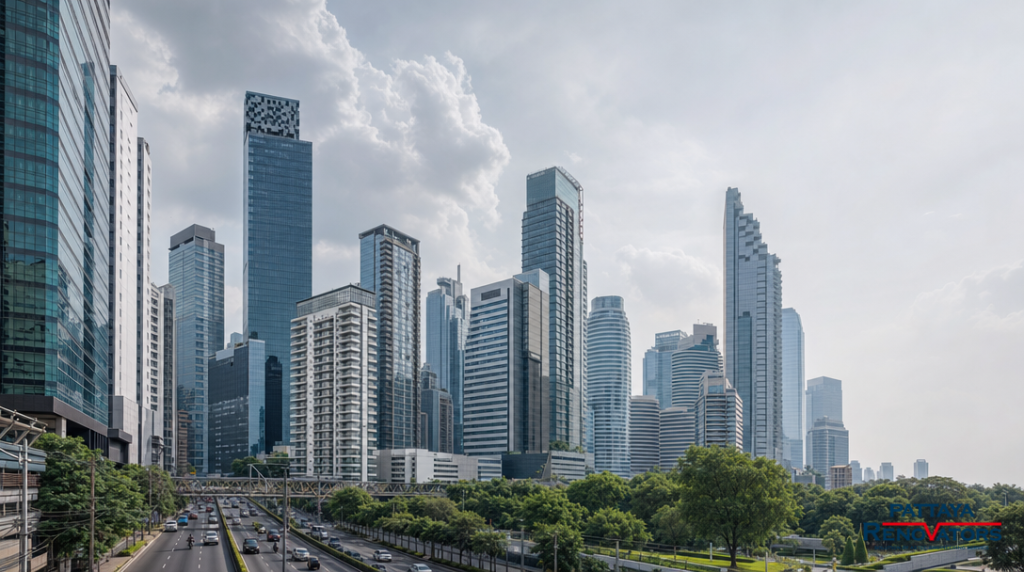
Bangkok has been the default choice for foreign property buyers in Thailand for a long time. There’s nothing mysterious about why — it’s the capital, it’s familiar, and prices went up reliably for years. But that narrative has hit some serious headwinds. The inventory problem. As of late 2024, there were roughly 58,000 unsold condo units sitting in Bangkok’s central market alone. Zoom out to the full Greater Bangkok area and that number climbs to around 235,000 units. Developers have responded by cutting new launches dramatically — well under 20,000 units were launched across all of 2025, compared to an annual average of roughly 50,000 over the prior decade. When developers are pulling back that hard, it tells you something about where the market really is. Sales have dropped sharply. Bangkok condo sales fell by roughly 37% in 2024 compared to the year before. Demand hasn’t recovered to match even the reduced supply coming to market. The earthquake factor. The March 2025 earthquake in Myanmar sent tremors through Bangkok and triggered real concern among foreign buyers about high-rise buildings in the city. Bangkok sits on soft alluvial soil, which amplifies ground movement considerably. Kasikorn Securities estimated that ownership transfers for high-rise condos in Greater Bangkok could fall by as much as 50% in 2025 as a result. That’s a significant psychological shift in a market that was already under pressure. To be fair, the very top end of the Bangkok market — prime, well-located projects close to transit — has held up reasonably well, with sales rates above 80%. But that segment is out of reach for most buyers. Mid-range and outer-area Bangkok condos are a much harder sell right now, and that’s where most foreign investors are actually looking.
Phuket: Good Market, Shrinking Upside
Phuket tells a different story — the problem here isn’t weak demand, it’s that the market has already moved. The numbers are impressive on the surface. Knight Frank reported that 2024 was Phuket’s strongest year in over a decade, with over 10,000 new condo units launched and condo sales up around 60% year-on-year. Foreign buyers now account for roughly 60% of new condo sales on the island. Condo yields run at 5–8%, and the very best short-let units can reach higher. By those metrics alone, Phuket looks compelling. The catch: prices in prime Phuket areas like Bang Tao and Cherng Talay have risen at roughly 7–10% annually for condos in recent years, with villas in the top zones climbing 12–18%. Entry costs in those prime condo zones now sit at around 150,000–180,000 baht per sqm. That’s two to three times what you’d pay in Pattaya for comparable quality. The market has run. What that means practically is that the investors who bought Phuket condos three to five years ago did well. If you’re buying now, you’re entering at a much higher base, which compresses the potential for capital gain and makes your yield look smaller in absolute terms relative to the capital deployed. There are structural issues too. Phuket’s rental market is heavily tourism-dependent — the COVID years demonstrated how quickly that income can evaporate when visitor flows stop. The villa-heavy upper market also means higher per-unit investment amounts and longer hold periods, which limits flexibility.
Pattaya: What the Numbers Actually Say
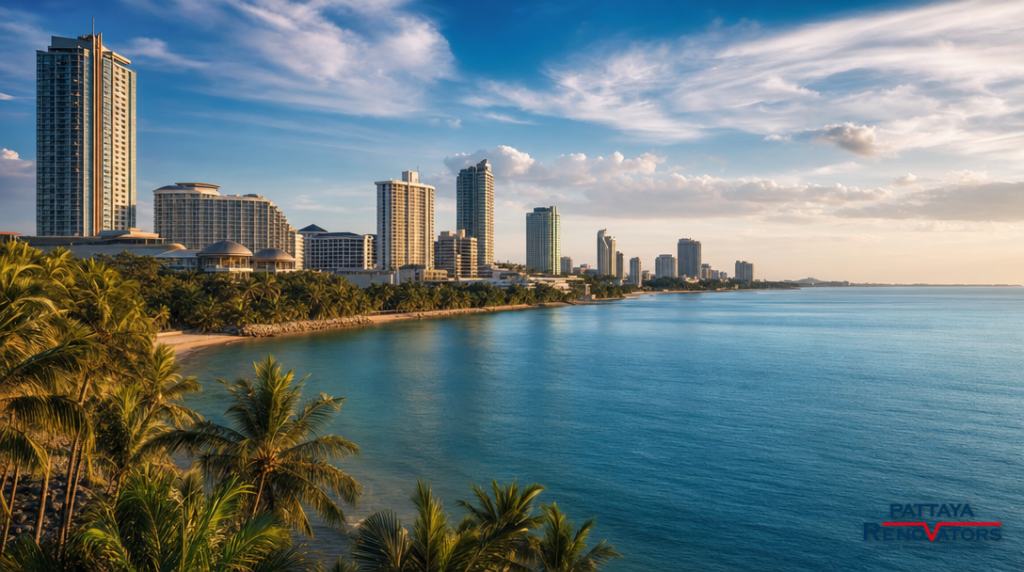
Pattaya’s average condo price sits at around 70,000 baht per sqm. Put that next to Bangkok’s prime CBD pricing of 200,000 baht and above, or Phuket’s prime zones at 150,000–180,000 baht, and the gap is stark. You’re looking at roughly a third of Bangkok’s prime CBD pricing and less than half of prime Phuket. That entry cost difference isn’t just about “cheap.” It changes the math in meaningful ways:
The same budget gets you more units, or more space, or leaves room to budget properly for renovation
Gross rental yields of 5–7% sit on a much lower capital base, so the absolute return per baht invested is competitive
Exit flexibility is better — you’re not locked into a 5+ year hold just to break even
Pattaya’s absorption rate for new condos runs at around 76%, meaning new supply is being absorbed without the kind of inventory pile-up Bangkok is dealing with. The market isn’t overheated and it isn’t stagnating — it’s in reasonable balance.
The Factor the Other Two Don’t Have
Beyond the pure numbers, Pattaya has a structural story that Bangkok and Phuket simply don’t share. The Eastern Economic Corridor (EEC) — Thailand’s flagship industrial development zone — runs directly through the Chonburi and Rayong provinces surrounding Pattaya. This isn’t speculative; it’s been running for years. International manufacturers operating in the EEC generate a steady stream of expatriate residents who need somewhere to live. That demand doesn’t move seasonally the way tourism does. The high-speed rail link connecting Bangkok’s Suvarnabhumi and Don Mueang airports to U-Tapao (Pattaya’s airport) is planned for completion in the early 2030s. Once that’s in place, Pattaya becomes a direct rail connection from two major international airports. That kind of access change has historically repriced property markets. Neither Bangkok nor Phuket has this combination of industrial-driven residential demand plus a clear, time-bound infrastructure catalyst that hasn’t yet been priced in.
The Renovation Angle
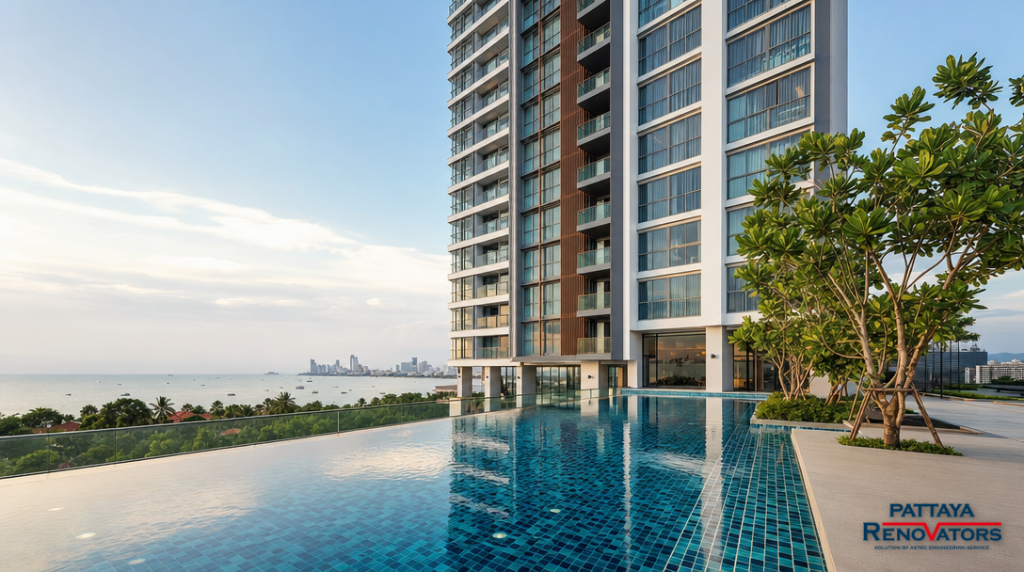
There’s one more element worth mentioning for anyone thinking about the investment from a returns perspective rather than purely buy-and-hold. Pattaya has an unusually large stock of condos built between roughly 2005 and 2015 — properties that are now 10 to 20 years old. Many of them are in decent locations with good views, but the interiors are dated. The gap between an unrenovated unit and a well-finished one is significant, both in terms of achievable rent and likely resale price. In Pattaya, a modern, well-managed building and a dated high-rise two streets away can differ by 30–40% per square metre even in the same area. This kind of opportunity — buy dated, renovate well, rent or sell at a premium — exists everywhere in theory, but in practice it requires a market where the entry cost is low enough to leave room for renovation spend, and where demand for quality rentals is genuine. Bangkok’s costs are too high for this to work efficiently at most price points. Phuket’s strong market pulls in buyers at high prices regardless of condition. Pattaya is the market where this logic actually holds.
What This Means for You
If you’re a Pattaya resident or an owner already in this market, you’re sitting in a position that’s worth understanding clearly. The city’s investment case isn’t based on hype — it’s based on specific conditions in the current market relative to its two main competitors. Bangkok has real problems that will take time to resolve. Phuket has become expensive enough that the best of the gains have been made. Pattaya’s entry cost, yield profile, and infrastructure pipeline put it in a different position than either of them right now. That said, none of this means Pattaya investment is without risk or complexity. Getting the right property, in the right condition, in the right location — and managing it properly — still matters enormously. The market creates the opportunity; execution determines the outcome.
One More Thing — A Free Resource
We’ve put together a full guide called “Why Most Pattaya Renovations Go Wrong” — a detailed read that goes deeper into how this market actually works, the most common failure points, and how to spot a contractor who’ll see the job through properly. We’re offering it free to anyone who contacts us for a quotation. Get in touch, we’ll arrange a free site visit and written proposal — and send the guide along with it, no strings attached. Thinking about a renovation? Request a free quotation via WhatsApp or LINE.
Tell us about your kitchen or bathroom, your priorities, and your timeline. We will visit your property, prepare a written quotation, and walk you through exactly what a Pattaya Renovators project includes — before you commit.
We use cookies to make this website work and, with your consent, to understand how visitors use it. You can accept all cookies, reject non-essential cookies, or manage your preferences. For more information, see our Cookie Policy.
Functional Always active
The technical storage or access is strictly necessary for the legitimate purpose of enabling the use of a specific service explicitly requested by the subscriber or user, or for the sole purpose of carrying out the transmission of a communication over an electronic communications network.
Preferences
The technical storage or access is necessary for the legitimate purpose of storing preferences that are not requested by the subscriber or user.
Statistics
The technical storage or access that is used exclusively for statistical purposes.The technical storage or access that is used exclusively for anonymous statistical purposes. Without a subpoena, voluntary compliance on the part of your Internet Service Provider, or additional records from a third party, information stored or retrieved for this purpose alone cannot usually be used to identify you.
Marketing
The technical storage or access is required to create user profiles to send advertising, or to track the user on a website or across several websites for similar marketing purposes.